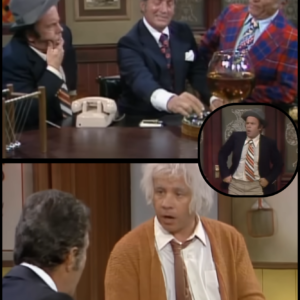
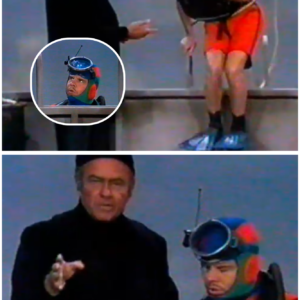
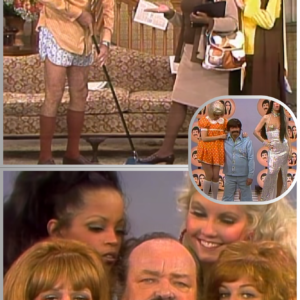
It starts innocently enough: two weary long-haul truckers, played by Tim Conway and Harvey Korman, exchange macho banter in a smoke-filled cab, pretending to be kings of the open road. The “truck” is nothing more than a rickety prop mounted on wobbly hydraulics, but once the engine “roars” to life, it becomes the most unpredictable character in the room. Within seconds, the illusion spirals into chaos.

Conway, ever the master of deadpan absurdity, keeps grinding the imaginary gears while Korman tries desperately to stay in character — his lips trembling as laughter bubbles beneath the surface. Carol Burnett, donning a grease-stained cap and oversized sunglasses, sits between them with a look so stoic it borders on saintly. Her commitment only makes the madness worse. Every bump in the “road,” every sputtering shift of the fake transmission, sends the cast and crew deeper into uncontrollable laughter.
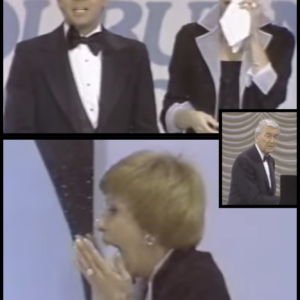
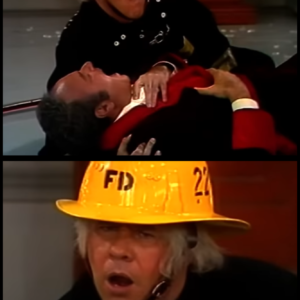
By the midpoint, all sense of narrative is gone. The cab is shaking violently, props are falling apart, and the audience can barely breathe through the laughter. Korman collapses into giggles, Conway loses control, and Carol — the queen of composure — finally breaks, her laughter echoing across the studio.

When the sketch ends, no one’s really “driving” anymore — the truck, the story, and even the script have completely derailed. But that’s the beauty of it: in that moment of total breakdown, The Carol Burnett Show captures what made it legendary — the joy of performers having too much fun to stop.
It’s the kind of sketch that reminds you comedy doesn’t need polish or perfection — just timing, chemistry, and the courage to let go. Decades later, fans still talk about “Tough Truckers” as one of the purest examples of Burnett’s magic: chaos, laughter, and a reminder that sometimes the best moments are the ones no one planned.