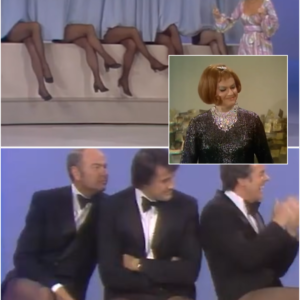
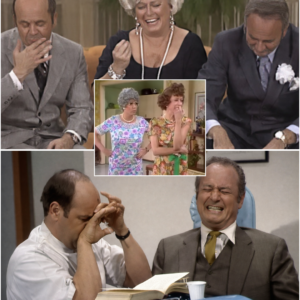
Two comedy legends sat side by side at the piano — tuxedos crisp, faces serious, playing the role of true professionals. Then, in an instant, everything changed. 🎹😄 Tim Conway tapped a wrong note, glanced at Harvey Korman, and the moment gently unraveled into pure comedy magic. What followed wasn’t just a performance — it was shared joy. Two longtime partners struggling to keep it together, smiling, pausing, and losing control as the audience laughed along with them. Every look, every pause, every imperfect note became unforgettable, showing that the best humor comes from timing, trust, and connection. Years later, fans still return to the classic Piano Duet — not just to laugh, but to relive the warmth and happiness that only Conway and Korman could bring to the stage.

There are moments in television history that feel like lightning caught on camera — unscripted, unrehearsed, and unforgettable. Few capture that magic as perfectly as Tim Conway and Harvey Korman’s legendary “Dueling Pianos” sketch from The Carol Burnett Show. What began as a playful parody of classical musicians became one of the greatest examples of comedic chemistry ever broadcast, a moment where two giants of comedy simply couldn’t hold it together — and audiences have cherished it ever since.

A Duel No One Wanted to End
The stage was prepared like a dramatic showdown: two grand pianos facing one another, the lights low, the audience waiting with anticipation. Dressed in crisp tuxedos, Conway and Korman sat like rival virtuosos ready to deliver a serious recital — except everyone watching knew better. Tim Conway’s eyes were already dancing with mischief.

He cracked his knuckles.
Adjusted his sleeves.
Shot Harvey a sideways glance that spelled trouble.
And the duel began.

Chaos in Perfect Rhythm
Korman, ever the straight man, attempted to maintain his dignity, posture stiff and expression focused. But it took Conway mere seconds to break him. With exaggerated flourishes, dramatic pauses, and over-the-top “concentrated” faces, Conway turned the performance into comedic gold.

Then came the wrong note — Conway’s signature move. He pretended to recover, only to tumble even deeper into musical disaster. The crowd roared. Korman fought for composure… and lost completely. His shoulders shook, tears streamed down his cheeks, and he covered his face, defeated by Conway’s silent genius.

The Sound Crew: The Unsung Heroes
Fans still praise the sound team for matching every erratic flourish with perfectly timed piano notes. Conway could pause, twitch a finger, or slam the keys dramatically — and the crew responded like musicians reading his mind. It was a symphony of timing, teamwork, and pure comedic intuition.

As one viewer wrote:
“The sound crew were the invisible stars. They made every one of Conway’s antics sound real.”

A Friendship That Fueled the Laughter
What made this sketch truly special wasn’t just the humor — it was the bond between Conway and Korman. Their friendship stretched far beyond the stage. They trusted each other fully, giving the other space to shine, collapse into laughter, and make the moment unforgettable. There was no one-upmanship — only joy.

Audiences didn’t just laugh at them; they laughed with them, feeling the warmth and camaraderie that defined their partnership. Conway’s mischievous grin paired with Korman’s helpless giggles became a formula that America fell in love with.

A Comedy Masterpiece That Still Feels Fresh
Decades later, the “Dueling Pianos” sketch hasn’t aged — it has become more treasured. Fans describe it as a reminder of a different kind of comedy: clever, physical, innocent, and rooted in genuine craft. It wasn’t mean. It wasn’t cynical. It was simply two brilliant performers having the most fun possible.

One fan wrote:
“Moments like this are why my generation was blessed. This was comedy with heart — the kind we don’t see anymore.”

When the final note hit and applause thundered, it wasn’t just appreciation for talent — it was recognition of magic. A moment that could never be recreated, only remembered.

A Love Letter to Laughter
Today, “Dueling Pianos” still circulates online as one of the greatest sketches ever performed. It’s a reminder that comedy doesn’t need perfection — sometimes, the funniest moments come when everything goes gloriously wrong.

You can still picture it:
Tim looking up with that impish grin.
Harvey trying not to collapse beside him.
Both of them knowing they’d made the world laugh a little louder.

Some sketches entertain. This one endures.

Related Posts

Pimple Treatment At Home

Ear blackheads (video)

Tim Conway had no idea he was about to turn The Carol Burnett Show upside down, but the moment he gasped, “I can’t stop… I just can’t,” everything fell apart in the most unforgettable way. What was meant to be a smooth, Broadway-style musical number suddenly crashed into absolute madness the second the audience saw the male cast lined up in classy tuxedo jackets… paired with skin-tight, neon dance leggings gripping for dear life below.

The duo had the audience in stitches as Harvey Korman played a nervous patient and Conway played the role of the dentist. They don’t make comedians like…

There’s a reason many comedians hesitated before stepping on stage with Tim Conway. He didn’t just stretch the rules — he quietly stepped outside them. A sketch would move along exactly as planned, the timing steady and everything under control. Then Tim would add one small detail that seemed to come from nowhere. No setup, no explanation, just a perfectly misplaced moment. The instant Harvey Korman caught on, it was written all over his face — that split second of confusion, the silent attempt to stay composed while realizing the scene had taken a turn no one planned for. The laughter that followed wasn’t rehearsed. It was pure reflex. From that moment forward, the sketch belonged to chaos in the best possible way — driven by raw timing, genuine reactions, and a style of comedy that could never be duplicated the same way twice.

There was a quiet truth backstage on The Carol Burnett Show: if Tim Conway was in the sketch, no rehearsal truly mattered. The writers could polish every…

I’m convinced Tim Conway had one secret mission: dismantle Harvey Korman — slowly, mercilessly, and with exquisite politeness. One shuffle at a time. You’ve never seen a silent comedy duel like this. Tim moves in near–slow motion: a blink, a tiny step, a careful reach for the ship’s wheel… and Harvey is already gone. Gasping. Wheezing. Folding in on himself like he just sprinted a marathon in clown shoes. It’s surgical. Every pause lands like a punchline. Every shuffle becomes a weapon. Every stretch of silence tightens the trap. The studio is finished. The cast is finished. The crew is finished. Everyone’s doubled over, fighting for air — except Harvey, who’s trapped in the most polite nightmare imaginable, plotting revenge while begging for mercy. Patience doesn’t just disappear — Tim turns it into a weapon of mass hilarity. Watching him work feels like a masterclass in comedy, disguised as the gentle destruction of one man’s dignity. And the best part? There’s a behind-the-scenes detail from this sketch that fans swear is even funnier than what actually made it to air.

And then there is Tim Conway and Harvey Korman, a pair so perfectly mismatched in discipline and chaos that every sketch they touched became instant television history….

Twelve minutes that shattered live television — Tim Conway slowly dismantles Harvey Korman while America loses it. It was a Saturday night. The popcorn was warm, the living room glowed blue from the TV, and then The Carol Burnett Show slipped into full-blown chaos. With surgical patience, Tim Conway took his time — stretching every pause, milking every look — until Harvey Korman had absolutely no defense left. From The Oldest Safecracker to The Oldest Surgeon, the laughter wasn’t written into the script. It was unavoidable. You could feel it building, second by second, and that anticipation made the payoff even sweeter. From an American living-room point of view, this wasn’t just comedy. It was a shared ritual — a moment when television pulled families together and laughter felt truly communal.

Remember those Saturday nights? We’d settle in front of the TV, the living room aglow with anticipation, for another episode of “The Carol Burnett Show.” Oh, those…

Leave a Reply

Your email address will not be published. Required fields are marked *