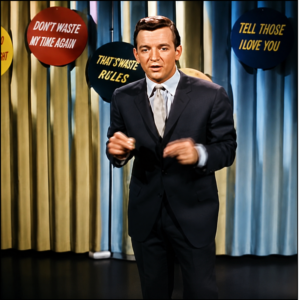
The Righteous Brothers’ “You’ll Never Walk Alone” Echoes Through Generations With Soulful Brilliance in 1965

When The Righteous Brothers released their version of “You’ll Never Walk Alone” in 1965, they did more than revive a Broadway classic — they redefined it. Originally composed by Rodgers and Hammerstein for the 1945 musical

Carousel, the song had been a symbol of hope and perseverance. But in the hands of Bill Medley and Bobby Hatfield, it took on a raw emotional depth that connected with a wide pop audience, especially after their powerful live rendition on national television. Their performance helped bring a theater standard into the mainstream pop and soul lexicon, making it unforgettable for generations.

The Righteous Brothers, Bill Medley and Bobby Hatfield, had already made a name for themselves as one of the most emotionally potent duos in popular music. Emerging from California in the early ’60s, they brought a unique blend of deep baritone and soaring tenor vocals that would later define what critics dubbed “blue-eyed soul.” Their ability to blend the gritty intensity of rhythm and blues with the melodic sensibilities of pop made them stand out in a crowded music scene, dominated at the time by British Invasion acts and Motown stars.

The decision to cover “You’ll Never Walk Alone” was not one of trend-chasing, but of personal and artistic intent. The song’s message — enduring hardship with strength and dignity — resonated deeply with both singers. The duo had often spoken about the emotional honesty in their music, and this track, with its rich legacy and universal theme, offered them the perfect vessel for that sincerity. Choosing it for their

Just Once in My Life album was a way of honoring their influences while stretching the emotional boundaries of popular music.

The production of the song was deliberately stripped down to let their voices shine. With Medley taking the lower registers and Hatfield soaring into the climactic high notes, the arrangement emphasized contrast and drama. The instrumentation was restrained — a quiet piano introduction, subtle string accents, and gradually building percussion that swelled into an almost gospel-like crescendo. Their voices didn’t just harmonize; they collided and rose with intention, turning the performance into a soul-baring confession.

Upon its release, the song received positive acclaim, particularly after the duo performed it on The Ed Sullivan Show later that year. While it didn’t chart as high as some of their other hits, its emotional impact was undeniable. Audiences were visibly moved by the televised performance, and it gave new life to a song that was, by then, two decades old. Critics praised their vocal control and the sheer vulnerability of their delivery.

The performance’s cultural weight was immediately felt. “You’ll Never Walk Alone” had long been a song of solidarity and sorrow, adopted by football fans, civil rights movements, and grieving communities alike. But The Righteous Brothers managed to translate it into the language of American pop soul without losing a shred of its original dignity. They didn’t just sing the song — they embodied it. In doing so, they helped shift the perception of what pop music could be.

For The Righteous Brothers, the song marked another turning point in an already soaring career. Following chart-toppers like “You’ve Lost That Lovin’ Feelin’” and “Unchained Melody,” this track allowed them to show a quieter, more reverent side. It wasn’t about commercial dominance this time — it was about legacy, expression, and depth. It cemented their reputation as not just hitmakers but interpreters of deep emotional truths.

Related Posts

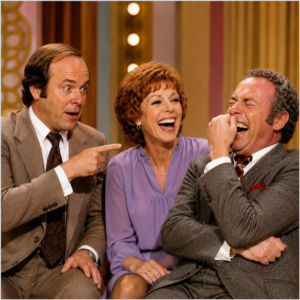
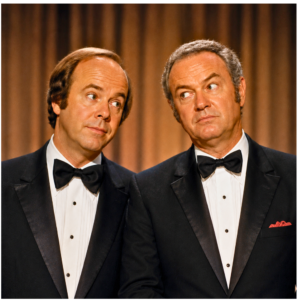
Tim Conway didn’t just perform comedy — he ambushed it. And when Harvey Korman was on stage with him, it was only a matter of time before everything fell apart. One slow delivery, one innocent question, one ridiculous twist… and suddenly Harvey is fighting for his life trying not to laugh. What starts as a simple sketch quickly turns into complete chaos. Tim keeps pushing the moment further and further off script, while Harvey’s composure cracks piece by piece. The audience can feel it coming — that legendary moment when Korman loses the battle and the laughter takes over.

“The New Office Machine” An office. Harvey Korman plays the serious office manager. Tim Conway plays the new maintenance guy sent to fix a mysterious machine. Harvey…

Pimple Treatment At Home

Ear blackheads (video)

Tim Conway had no idea he was about to turn The Carol Burnett Show upside down, but the moment he gasped, “I can’t stop… I just can’t,” everything fell apart in the most unforgettable way. What was meant to be a smooth, Broadway-style musical number suddenly crashed into absolute madness the second the audience saw the male cast lined up in classy tuxedo jackets… paired with skin-tight, neon dance leggings gripping for dear life below.

The duo had the audience in stitches as Harvey Korman played a nervous patient and Conway played the role of the dentist. They don’t make comedians like…

There’s a reason many comedians hesitated before stepping on stage with Tim Conway. He didn’t just stretch the rules — he quietly stepped outside them. A sketch would move along exactly as planned, the timing steady and everything under control. Then Tim would add one small detail that seemed to come from nowhere. No setup, no explanation, just a perfectly misplaced moment. The instant Harvey Korman caught on, it was written all over his face — that split second of confusion, the silent attempt to stay composed while realizing the scene had taken a turn no one planned for. The laughter that followed wasn’t rehearsed. It was pure reflex. From that moment forward, the sketch belonged to chaos in the best possible way — driven by raw timing, genuine reactions, and a style of comedy that could never be duplicated the same way twice.

There was a quiet truth backstage on The Carol Burnett Show: if Tim Conway was in the sketch, no rehearsal truly mattered. The writers could polish every…

I’m convinced Tim Conway had one secret mission: dismantle Harvey Korman — slowly, mercilessly, and with exquisite politeness. One shuffle at a time. You’ve never seen a silent comedy duel like this. Tim moves in near–slow motion: a blink, a tiny step, a careful reach for the ship’s wheel… and Harvey is already gone. Gasping. Wheezing. Folding in on himself like he just sprinted a marathon in clown shoes. It’s surgical. Every pause lands like a punchline. Every shuffle becomes a weapon. Every stretch of silence tightens the trap. The studio is finished. The cast is finished. The crew is finished. Everyone’s doubled over, fighting for air — except Harvey, who’s trapped in the most polite nightmare imaginable, plotting revenge while begging for mercy. Patience doesn’t just disappear — Tim turns it into a weapon of mass hilarity. Watching him work feels like a masterclass in comedy, disguised as the gentle destruction of one man’s dignity. And the best part? There’s a behind-the-scenes detail from this sketch that fans swear is even funnier than what actually made it to air.

And then there is Tim Conway and Harvey Korman, a pair so perfectly mismatched in discipline and chaos that every sketch they touched became instant television history….

Leave a Reply

Your email address will not be published. Required fields are marked *