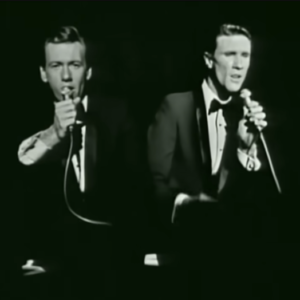
In 1964, at the height of the British Invasion, a playful and infectious song titled “Do Wah Diddy Diddy” rocketed to the top of the charts and became one of the defining sounds of the era. Performed by Manfred Mann, a London-based rhythm and blues group named after its South African-born keyboardist, the single brought lighthearted charm and irresistible rhythm to American and British audiences alike. It reached No. 1 in both the UK and the U.S., marking Manfred Mann as one of the few groups to score transatlantic chart-toppers during the fiercely competitive mid-60s pop boom. Its mix of nonsense syllables and romantic euphoria made “Do Wah Diddy Diddy” instantly memorable—and nearly impossible not to sing along with.
Manfred Mann had its origins in London’s jazz and R&B circuit, initially formed in 1962 by Manfred Mann (born Manfred Lubowitz) and drummer Mike Hugg. With a background in jazz theory and a fascination for American blues, Mann brought a cerebral edge to a band that otherwise embraced the raw energy of early British rock. The addition of charismatic lead singer Paul Jones brought a powerful and expressive voice to the group’s front line. While many of their contemporaries were rooted in either rockabilly or Merseybeat, Manfred Mann cultivated a more musically diverse identity, blending blues, soul, and beat music with an emphasis on clever arrangements and polished performances.
“Do Wah Diddy Diddy” wasn’t originally their song. It was penned by legendary American songwriting duo Jeff Barry and Ellie Greenwich, who first recorded it with the girl group The Exciters in early 1964. Their version had a tougher, grittier edge and only saw modest success. When Manfred Mann discovered the song, they decided to rework it for a male vocal lead, bringing out its singalong potential and leaning into its joyful absurdity. The lyrics, which describe the thrill of spotting a girl walking down the street and instantly falling in love, weren’t revolutionary—but their delivery was, brimming with enthusiasm and punch.
Recorded at EMI Studios in London, the group’s version was shaped under the guidance of producer John Burgess. The arrangement emphasized call-and-response vocals, a foot-stomping rhythm, and a buoyant energy that played beautifully off Paul Jones’ confident delivery. The band’s musicianship—particularly Mann’s deft keyboard fills and Hugg’s tight drumming—kept the track from slipping into novelty territory. Instead, it felt urgent and fun, a perfect balance of youthful giddiness and musical precision. From its opening “There she was just a-walkin’ down the street…” the song marched forward with unstoppable momentum.
Released in the UK in July 1964, “Do Wah Diddy Diddy” became a smash hit almost immediately, topping the charts by August. Its success spread quickly across the Atlantic, where it entered the U.S. Billboard Hot 100 in September and reached No. 1 by the end of October. For Manfred Mann, it was their first major breakthrough in America and would remain their biggest international hit. The single stayed on the U.S. chart for 13 weeks and firmly planted them in the upper echelon of British Invasion acts, alongside The Beatles, The Animals, and The Dave Clark Five.
Culturally, the song helped solidify the appeal of British beat music, not just for its sonic qualities but for its attitude—cheerful, slightly cheeky, and endlessly melodic. “Do Wah Diddy Diddy” wasn’t concerned with rebellion or introspection; instead, it captured the universal feeling of infatuation in a way that transcended age, class, and nationality. The use of nonsensical syllables, borrowed from the doo-wop tradition, gave it a transatlantic flavor and made it accessible even to audiences unfamiliar with the deeper roots of R&B and soul.
The explosive success of the single opened numerous doors for Manfred Mann. They were invited to tour internationally, appear on major television programs, and record for the lucrative American market. It shifted them from respected R&B interpreters to mainstream pop stars. Though they would later pursue more experimental and jazz-inflected material, the hit established a commercial identity they would never fully shake. It also gave them the confidence to tackle more ambitious singles, such as “Pretty Flamingo” and their chart-topping cover of Bob Dylan’s “The Mighty Quinn” a few years later.
Within the broader musical landscape, “Do Wah Diddy Diddy” served as a template for many subsequent British hits that fused American songwriting with a UK sensibility. It inspired other beat groups to seek out U.S. songwriters and reinterpret their work for British audiences, a practice that blurred the lines between musical origin and national identity. The song also reaffirmed the commercial power of the Brill Building sound when filtered through the lens of the British Invasion.
Covers of “Do Wah Diddy Diddy” have continued for decades, though few match the charm of Manfred Mann’s take. It’s been reimagined by everyone from punk bands to children’s entertainers, and even parodied in television and film. Most famously, it featured in the 1981 military comedy
Stripes, in which Bill Murray leads his fellow soldiers in a marching rendition—an iconic moment that introduced the song to a new generation and solidified its status as a cultural touchstone.
At the time of the song’s release, Manfred Mann were also facing the challenges of quick fame. Paul Jones, though a brilliant vocalist, was beginning to eye a solo career. The rapid transition from club gigs to international tours was exhilarating but exhausting. Still, the band held together through several lineup changes, evolving with the times while always carrying the legacy of “Do Wah Diddy Diddy” in their repertoire.
Even decades later, the song remains a staple of classic rock and oldies playlists. Its timeless melody and universal message continue to resonate, especially among those who lived through its original run. In pop culture, it stands as a time capsule of 1964—a year when youth, rhythm, and innocence collided in thrilling ways. It also reflects the playful side of the British Invasion, offering a contrast to the moodier or more philosophical tracks of the period.
Musically, the song’s success helped validate the idea that pop didn’t have to be profound to be powerful. Its concise structure, crisp production, and infectious chorus influenced later pop acts seeking to balance substance with mass appeal. Its blend of American songwriting and British execution set a precedent that would echo well into the 1970s and beyond.
Though Manfred Mann would later shift into more progressive territory—especially with their 1970s offshoot, Manfred Mann’s Earth Band—the original group’s place in 60s pop history remains secure thanks in large part to “Do Wah Diddy Diddy.” It may have been a lightweight song in structure, but its impact was anything but.
Ultimately, “Do Wah Diddy Diddy” endures because it captures the sheer joy of falling in love and the exhilaration of pop at its most unpretentious. It’s a song that doesn’t overthink, doesn’t linger—it just moves, pulses, and invites everyone along for the ride. For Manfred Mann, it was the song that put them on the world stage. For the rest of us, it’s a three-minute celebration of rhythm, romance, and the golden age of British pop.