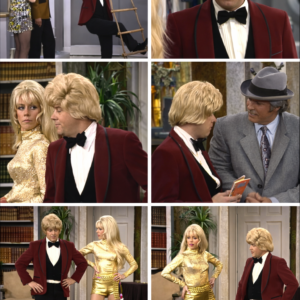
I’m convinced Tim Conway had one secret mission: dismantle Harvey Korman — slowly, mercilessly, and with exquisite politeness. One shuffle at a time. You’ve never seen a silent comedy duel like this. Tim moves in near–slow motion: a blink, a tiny step, a careful reach for the ship’s wheel… and Harvey is already gone. Gasping. Wheezing. Folding in on himself like he just sprinted a marathon in clown shoes. It’s surgical. Every pause lands like a punchline. Every shuffle becomes a weapon. Every stretch of silence tightens the trap. The studio is finished. The cast is finished. The crew is finished. Everyone’s doubled over, fighting for air — except Harvey, who’s trapped in the most polite nightmare imaginable, plotting revenge while begging for mercy. Patience doesn’t just disappear — Tim turns it into a weapon of mass hilarity. Watching him work feels like a masterclass in comedy, disguised as the gentle destruction of one man’s dignity. And the best part? There’s a behind-the-scenes detail from this sketch that fans swear is even funnier than what actually made it to air.
During rehearsals, everything felt safe. Tim Conway moved fast — quick, clean, controlled. The fall landed, the joke worked, and everyone relaxed. It was done. Then came taping night. One step. A pause. Another step. Time seemed to slow as Tim walked onstage as the “world’s oldest doctor,” every movement heavier, longer, more deliberate. Seconds stretched. Silence tightened. The room leaned in. Harvey felt it building. He tried to fight it. He didn’t win. Carol broke. The cast followed. The audience exploded. What started as scripted comedy turned into something else entirely — pure, unfiltered laughter, unfolding live in front of everyone. That wasn’t chaos. That was craft. Because great comedy isn’t about rushing the moment — it’s about knowing exactly when to slow down and let the room do the rest.
WHEN TIM CONWAY STEPPED INTO A SKETCH, ANYTHING COULD HAPPEN. Much of Tim Conway’s most memorable work comes from his 11 remarkable years on The Carol Burnett Show, a program so loved it stayed on television well into the 1990s. Long before Saturday Night Live changed the tone of sketch comedy, Carol Burnett was at the center of it all — and Conway became her most surprising presence on stage. Working alongside Harvey Korman and Vicki Lawrence, Conway perfected a style built on patience, gentle misdirection, and spontaneous moments that often caught everyone off guard. His calm delivery and playful instincts made even the simplest scenes unforgettable, often drawing genuine reactions from those around him. Today, many of those classic sketches can be found on the official Carol Burnett Show YouTube channel — and they still deliver the same joy decades later. One thing remains clear: when Tim Conway entered a scene, you knew something special was about to unfold.
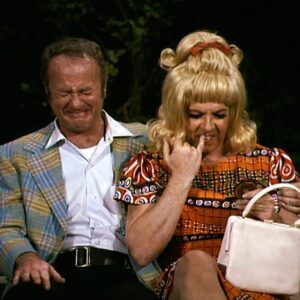
TIM CONWAY AND CAROL BURNETT DELIVER PURE CHAOS — EVEN THE CAST CAN’T KEEP A STRAIGHT FACE. In “As the Stomach Turns,” Carol Burnett is so desperate for drama that she’s practically begging for bad news — and Tim Conway walks in as the “problem” she didn’t know she needed
Carol did her best to hold things together, but Harvey never really had a chance — especially during the submarine sketch, when Tim quietly leaned in and asked, “How’s it going down there?” while Harvey fought to stay in character.
THE KIND OF MAGIC TV MAY NEVER RECREATE AGAIN. What fans once saw as simple vintage slapstick has resurfaced as something much deeper — a connection so natural and spontaneous that Tim Conway and Harvey Korman could barely make it through a scene without breaking into laughter on live TV. One glance from Conway, one unexpected moment, and Korman would completely lose it, sending the audience into fits and turning the set into joyful chaos. Social media is buzzing with emotion: some viewers overwhelmed by nostalgia, others amazed by how open and genuine their friendship felt onstage. The clips are racing past 10 million views, with fans saying modern comedy still hasn’t matched this level of effortless brilliance. It wasn’t just funny — it was trust, joy, and once-in-a-lifetime chemistry that made television history.